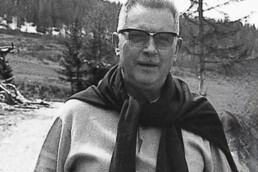
Jean Prouvé
1901 – 1984
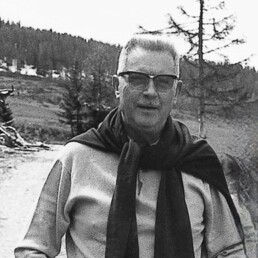
Jean Prouvé, born on April 8, 1901 in the 14th arrondissement of Paris and deceased on March 23, 1984 in Nancy.
Raised within the artistic environment of the École de Nancy, of which his father was a prominent figure, Jean Prouvé — a specialist in metalwork — quickly became part of the Modern Movement. An architect-engineer as well as an authentic creator, he understood, unlike many of his companions in the UAM, that one must “never copy, always create using the most advanced techniques of the moment, but with a complete understanding of the past.”
A builder more attuned to reality than to shifting ideologies, he revolutionised the art of construction through works that extended across all fields of creation, demonstrating rare qualities as both engineer and visual artist. For him, “there is no difference between constructing a piece of furniture and constructing a house.” The same rigour must apply.
The furniture he produced in his Maxéville workshops ranks among the most remarkable French pieces of the 1950s. Although initially disconcerting, their charm quickly asserts itself through exceptional detailing and unparalleled craftsmanship.
His Grand Prix national de l’architecture in 1982, along with his many collaborations with some of the most important architects of his time, make Jean Prouvé one of the most prestigious figures of modern art and design.
Patrick Favardin, Le Style 50 — Un moment de l’art français, Éditions Sous Le Vent, Paris, 1987.